Facilitation Skills Development Workshop
Facilitated the workshop for Nation Media Group (Cohort 2), organised by QTL-Net at the Aga Khan University, Nairobi, and received a certificate in recognition.
Teaching
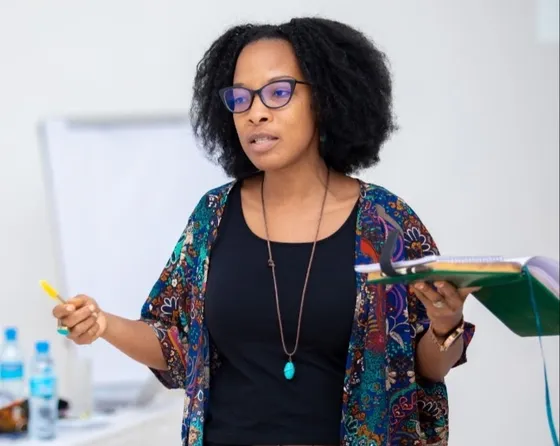
Since 2015 I have taught full-time and part-time Master of Education students at the Aga Khan University’s Institute for Educational Development, East Africa, and designed short courses for teachers across Kenya, Uganda and Tanzania.
01
I often describe my role as that of a tour guide: one who prepares the route, opens up questions and helps learners discover new terrain — while their questions and reflections continually enrich my own learning. These are the hats I have learned to wear.
I began my teaching journey in 2015, starting with a unique challenge: teaching teachers. How was I going to guide these experienced professionals? What new paths could I illuminate for them? I came to see myself not just as an instructor but as a tour guide — leading a journey through new landscapes of knowledge and reflection.
Like a tour guide who prepares a route so that travellers have a meaningful experience, I planned each session carefully, valuing preparation, content knowledge and engaging activities. I committed to making every class enriching and different from the last, and prayed for guidance to create meaningful encounters for my students and for myself. My role is not to dominate the journey but to help my students navigate, discover and appreciate the terrain of learning.
Just as a tour guide studies the landscape, I studied my content deeply and kept sharpening my skills, enrolling in an online course on early childhood education, care and development to learn not only the content but also how to teach. My first class, in the Foundations of Early Childhood course, went well beyond my expectations — affirming the power of preparation. It shows in student evaluations, where I often read comments such as “she comes to class prepared” and “she knows her stuff”.
Teaching graduate students, I have learnt just as much as I have taught. I have attended a number of professional development courses geared towards moulding a successful teacher, and they have sharpened my online teaching, lesson preparation and assessment skills, among others.
Rethinking Teaching helped me to be an organised teacher: it helped me to reflect on the courses I taught and to redesign them to keep them up to date. TLEW helped me to be a creative teacher, exposing me to teaching strategies that are engaging and inclusive in nature. For example, I learned to use BOPPPS, a strategy that helps a teacher stay focused while planning and during the actual teaching.
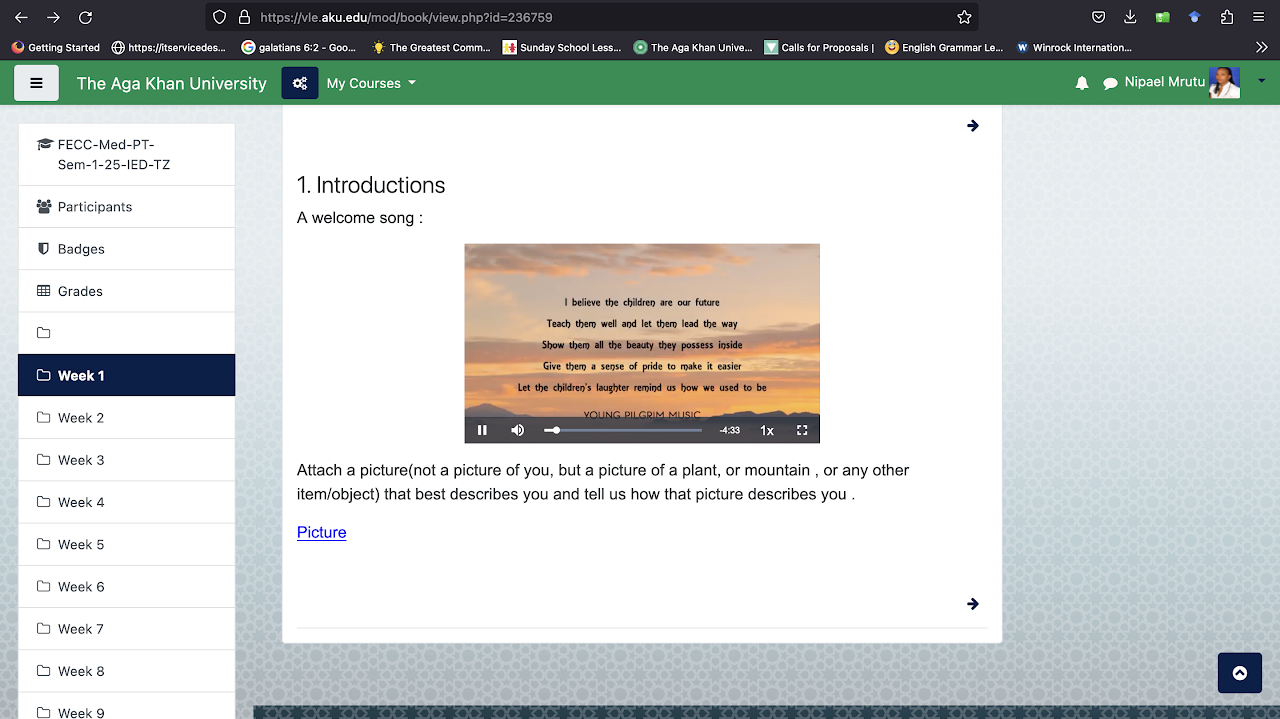
Another course that revolutionised my teaching was the VLE course. It taught me how to use digital teaching and learning tools and platforms, and to engage learners beyond the four walls of a classroom. With the VLE, the flipped classroom became more interesting and inclusive, because learners had more options for how to respond: they could share their contributions in the discussion forum through a drawing, a voice note or even a video clip.
Like a tour guide who adapts to new terrain, I keep refining my practice, weaving in strategies that make learning more inclusive and engaging. And from my students I have learned the value of flexibility, empathy and listening — lessons that continue to shape how I teach. Below are the key lessons I have learnt from them.
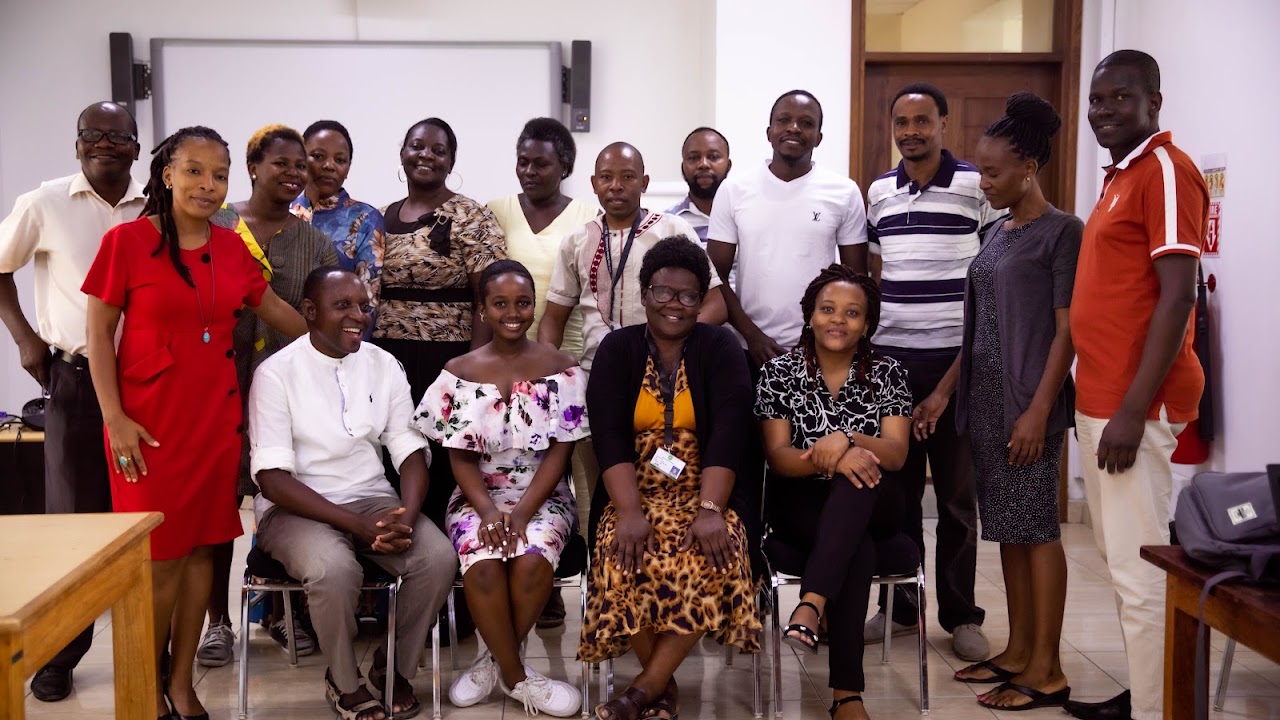
A teacher’s role extends beyond instruction. Much like a tour guide who makes sure every traveller feels safe and cared for, a teacher is not only someone who facilitates learning but also a carer. A teacher has to be empathetic; it is through empathy that I relate well with my learners, understand them, and offer the support they need to thrive. At Aga Khan University I have taught students from Tanzania, Kenya and Uganda, and sometimes a few from outside the African continent, each coming with different expectations, backgrounds and competences.
Patience and empathy have been key in making foreign students feel at home though away from home, while helping Tanzanian students feel valued and capable of doing better. I consciously chose to be patient and empathetic because I learned from my students that these two qualities make them calm, and when they are calm they learn better and perform better.
Patience includes responding to fears and concerns in a kind tone. It includes giving detailed feedback even on small things, such as “a paragraph can’t be made up of a single sentence; you should have at least three sentences”. Giving detailed feedback in the right tone, hoping that feedback which took a lot of time to give will support the learner to reach the learning objectives, can only be done by a teacher who cares: a teacher who is patient.
Sometimes caring meant sharing experiences. I shared experiences with students who were nursing mothers, because I too started my PhD journey when I was five months pregnant, and I understood what they were going through. I offered my time to listen, to advise and to lend a helping hand whenever possible: from helping to look for a nanny, to making sure the nursing room at Salama House was clean and safe for young babies, to giving out cookware, bed sheets and other household supplies. I did these things with a joyful heart, knowing they helped my learners settle and learn.
Many times I have heard it said that “a good, competent, successful teacher is an innovator”. An innovative teacher can mean many things: a teacher who is technology-savvy, a teacher who embraces reflective practice, and other similar abilities. Innovation also calls for risk-taking and crossing unfamiliar boundaries. It includes involving learners in teaching and learning, for instance in designing their own assessment tasks.
Over the years I have tried to be innovative in several areas. In designing assessment tasks I have engaged learners in presentations, digital stories, case studies, reflective papers and concept notes, and even in designing and facilitating workshops. I take my students on study tours where they see different education theories and approaches in practice: the Madrasa Resource Centre in Zanzibar, the Montessori Training Centre and the HighScope Tawi House Learning Centre in Dar es Salaam, and Upanga Nursery School are among the places my students have visited.
Like a tour guide who makes each journey unique, I keep looking for ways to make learning engaging and transformative — mixing assessment methods, integrating technology and involving students in shaping their own learning, from study tours to interactive digital platforms.
Over the years I have learned that a teacher wears many hats — much like a tour guide who is at once mentor, motivator and supporter. One of the main hats a teacher wears is that of a parent. It doesn’t matter whether one is teaching adults or children: a teacher is always a parent. A parent does not discriminate between children based on their abilities, but loves them all, knowing that each has different abilities and a different destiny, and that with adequate support they will all reach their full potential.
So it is with a teacher. What is key is to help learners navigate their own paths to reach their full potential, whatever their different abilities and strengths. As I guide my students, I also learn and grow, continually refining my practice to be the best guide I can be on their journey. As I taught, I learned all these.
As I guide my students, I also learn and grow.From my teaching philosophy
02
Master of Education programmes at AKU-IED, East Africa.
03
Certificate courses with the Centre of Education and Lifelong Learning (CELL), and teaching beyond the institute.
Facilitated the workshop for Nation Media Group (Cohort 2), organised by QTL-Net at the Aga Khan University, Nairobi, and received a certificate in recognition.
Designed and facilitated a one-week certificate course, taught in Kenya, Uganda and Tanzania as part of the SESEA project.
Designed and facilitated a one-week certificate course, taught in Kenya, Uganda and Tanzania as part of the SESEA project.
Designed and facilitated a one-week certificate course in Dar es Salaam, Tanzania, in June 2018.
A one-week workshop preparing AKU-IED EA alumni recruited as Professional Development Tutors to support the implementation of institute projects.
Facilitated the Re-Thinking course organised by the Network of Quality, Teaching and Learning (QTL-Net).
Trained PDTs and research assistants in data collection, entry, management and analysis across the STRAPPS, SESEA and F4L research projects.
04
Face-to-face and online learning designed for inclusion and engagement.
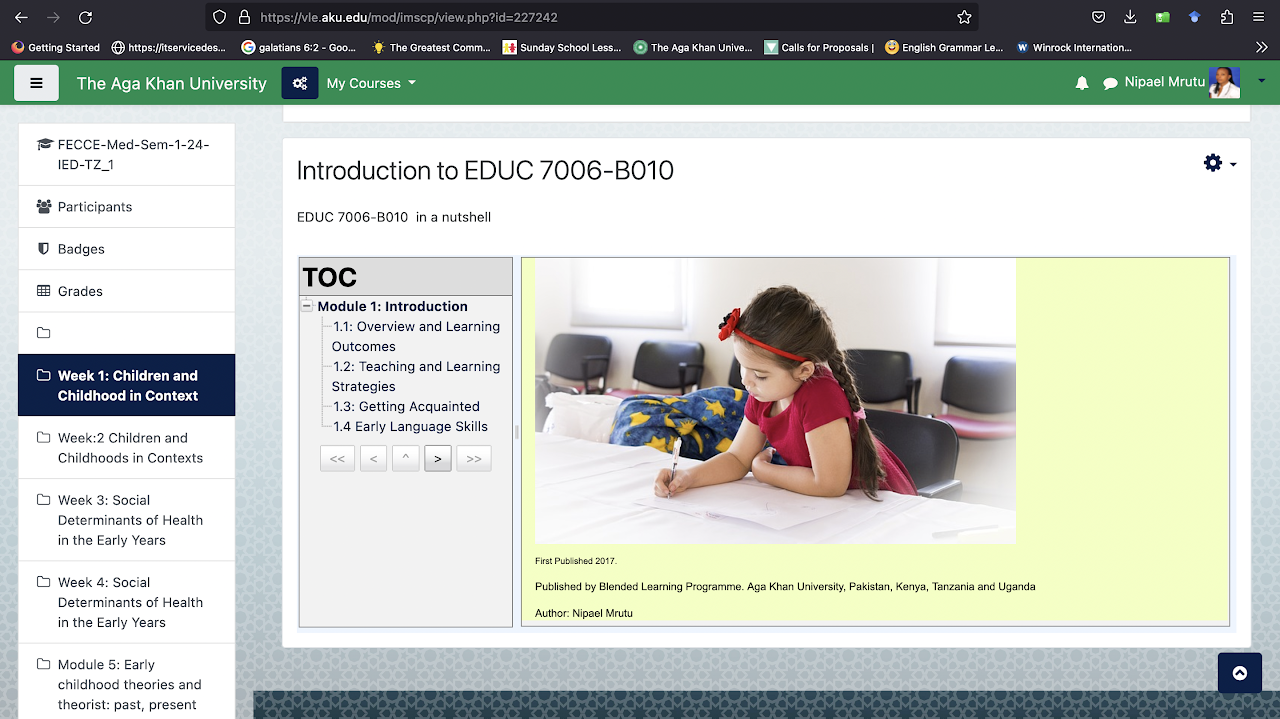
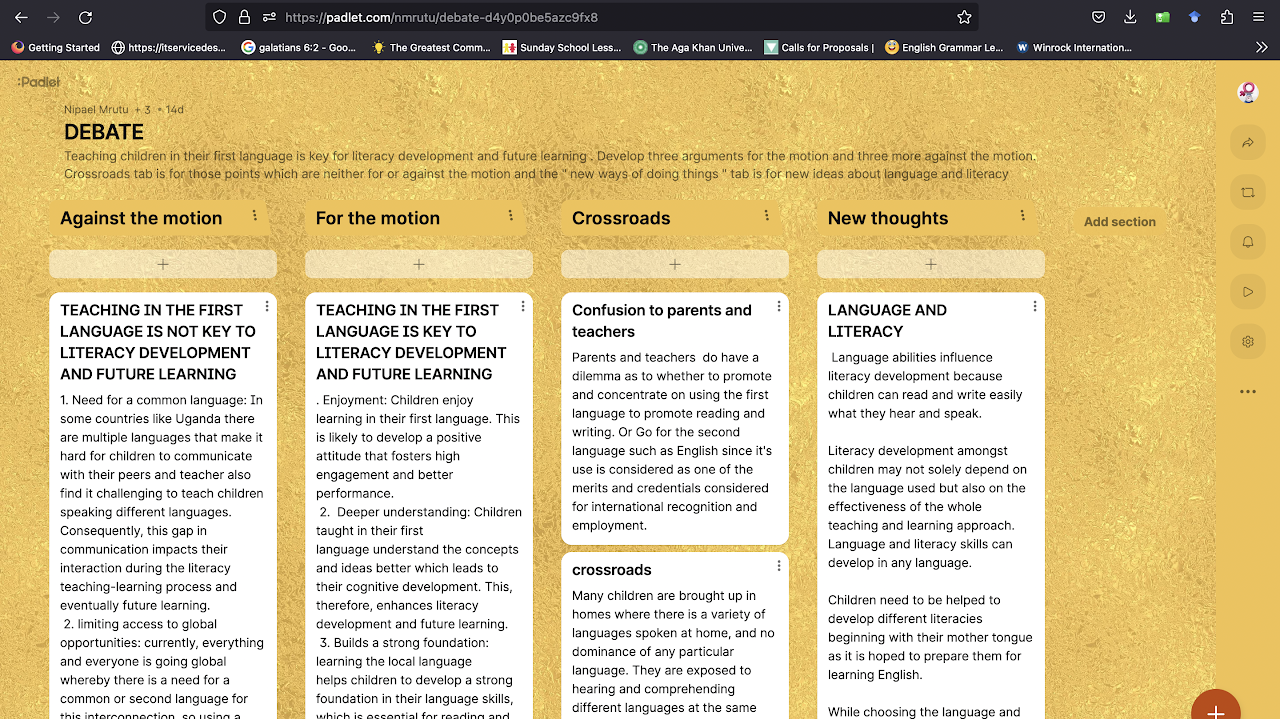
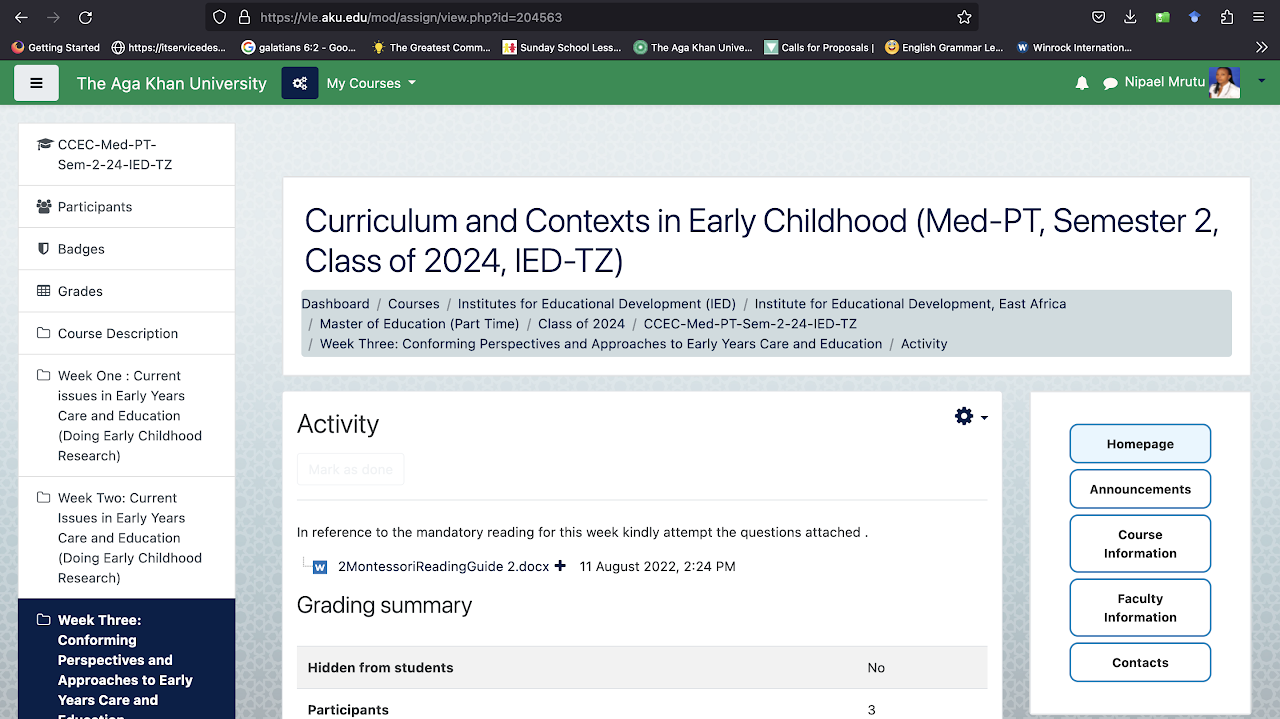
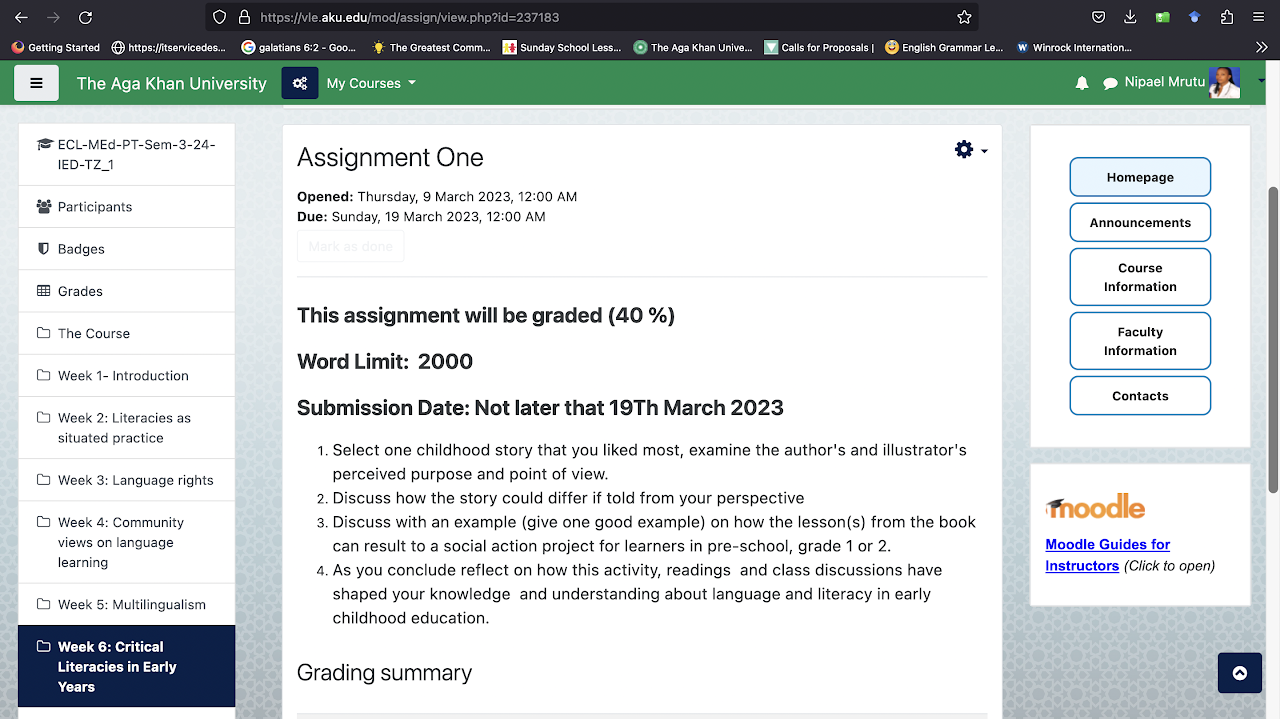
I use a range of strategies to ensure both inclusion and learner engagement, combining face-to-face sessions with online learning through Moodle. Face-to-face sessions include small and large group discussions, role plays, audio-visual materials, case studies, reviews of literature and research, presentations, debates, study tours, and instructor and guest lectures. Online, learners take part in whole-class and small-group forums and chats, reflective journaling, choice activities and feedback opportunities.
05
Study tours enable learners to move beyond their imaginations and experience the reality, so I take my students on study tours every year.
I hear, I forget. I see, I remember. I do, I understand.Chinese proverb
Montessori curriculum
ACE and HighScope curriculum
Islamic education
NECTA curriculum
Gender in Education
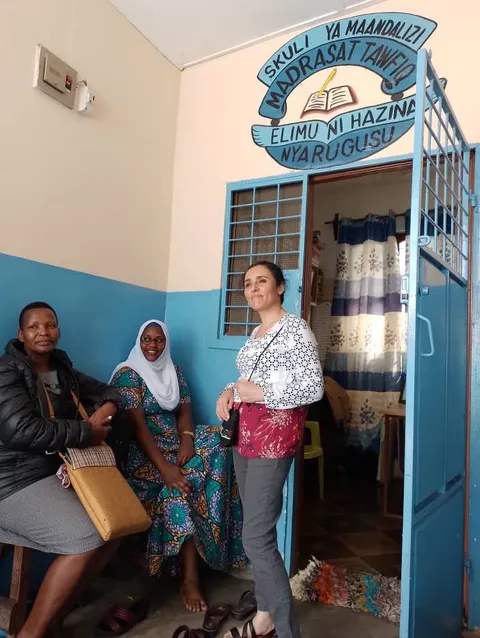
At Sega Girls’ Secondary School, master’s students on the gender elective developed a workshop manual and facilitated a gender workshop. In Zanzibar, students specialising in early childhood education developed a manual and facilitated a parental engagement workshop. At Upanga Nursery School, students on the Curriculum and Context in Early Childhood Education elective prepared teaching and learning materials guided by the theories they learned in class, and used them to teach the 3Rs.
06
I begin every supervision with an initial meeting where, together, we set the guiding principles: how often we meet as a group and one-to-one, and a walk through the research project handbook so that everyone knows what is expected of them, and of me, along the supervision journey.
07
A good teacher teaches from the heart, not from the book.
Student evaluations help me to evaluate myself, improve and grow professionally. I am humbled by how my students regard me across the courses I have taught, and their words give me reason to keep supporting them against all odds.
The class was very engaging. The instructor has opened our mind to think critically and to think differently.
I think she is the very best at encouraging cooperation, interaction, innovation and that makes her the best instructor.
My supervisor was always available to offer guidance and direction. She kept me updated on the days she was available and we planned on the days to meet.
She is a faculty who owns the course participants’ needs during instruction.
I have never forgotten all the good you did to me as my academic advisor.
This piece of work is dedicated to my beloved daughter Fetaru Maria Goretti who missed my motherly love during the time of study and my supervisor Nipael Mrutu who supported me even when it was so hard for me to do the work.
There is a child in Arua, Uganda, named after me. Her mother was my student; I taught her while she was pregnant.
Student evaluations of teaching (SET) folder